Chapter 04
Purchase decision friction
Friction is not “objection handling.” It is the patterned hesitation that appears when buyers try to become confident enough to act — and something in the system resists.
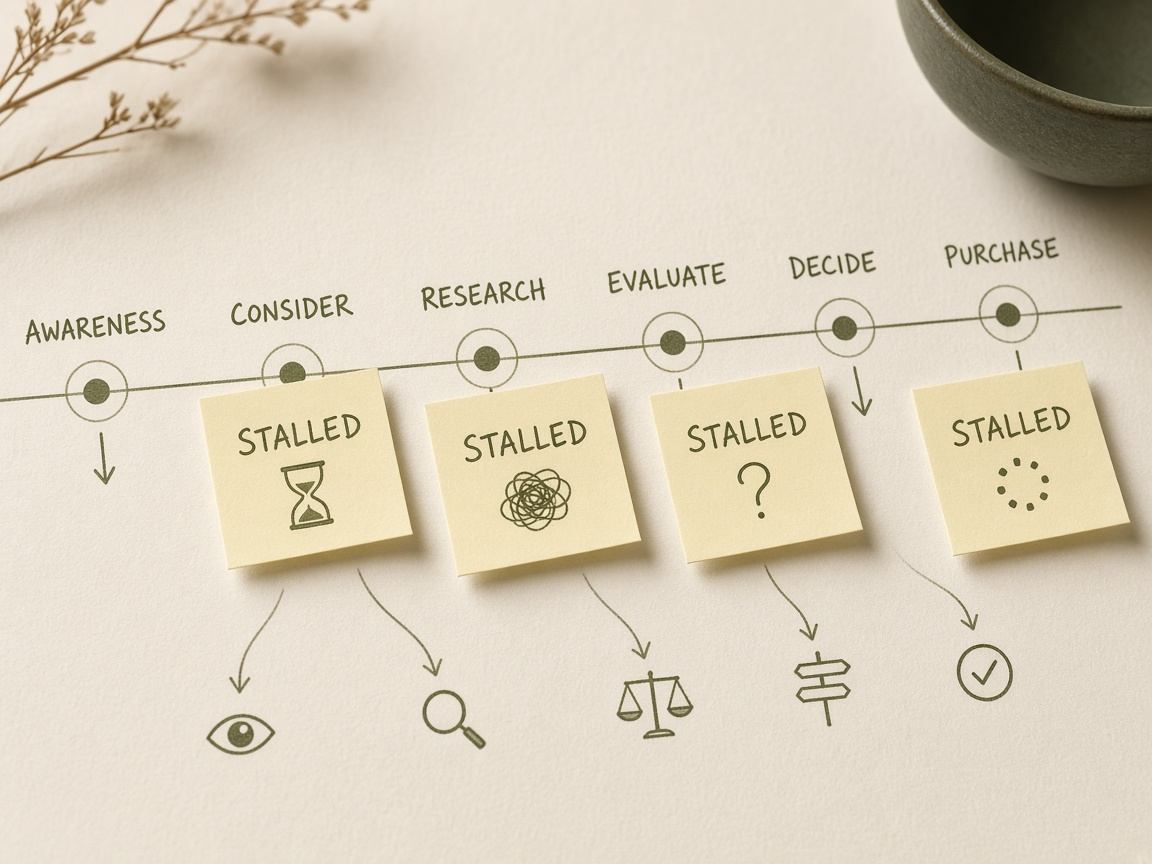
Friction types rempramla tracks
| Type | What it looks like | Typical source |
|---|---|---|
| Meaning friction | Team cannot agree what the product is for | Touchpoint language |
| Proof friction | Claims lack scenes or peer evidence | Case narrative gaps |
| Process friction | Procurement or security stalls timing | Committee design |
| Risk friction | Fear of internal blame outweighs upside | Political incentives |
| Comparison friction | Category feels interchangeable | Weak positioning |
How to find patterns without fake statistics
rempramla does not convert five interviews into “73% of the market.” Instead, look for recurrence: the same stall appearing across accounts, roles, or stages. Document counterexamples. A theme that collapses when one lost-deal story is added was never a theme.
Collect friction from three streams: interview protocols, touchpoint observation, and deal archaeology with sales (what changed the week a deal froze). Claude challenge rounds ask a hostile question of each theme: what would make this disappear? If nothing could, you may be describing a permanent industry condition rather than a fixable friction.
Friction vs preference
Buyers express preferences casually (“we like clean UI”). Friction shows up as cost: delayed meetings, silent champions, sudden security reviews, or a competitor who “felt safer.” Prefer evidence of cost over polite compliments.
From friction list to synthesis
Prioritize frictions that block more than one role on your decision-maker map. Then move to qualitative pattern synthesis to cluster causes — and only then draft language in positioning synthesis.
If your positioning does not name a real friction, it is decoration.
Research briefing
Subscribe for rempramla notes on friction patterns and claude field practice.